
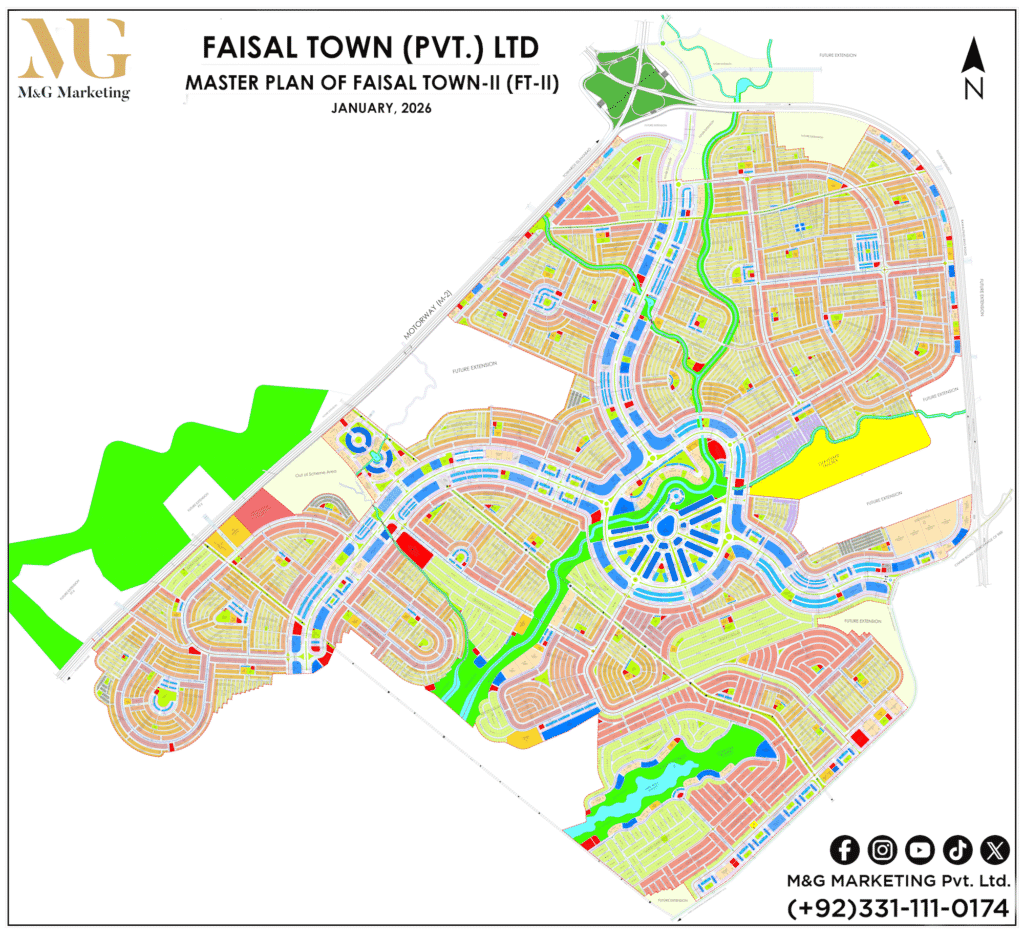
When people search “Faisal Town Phase 2 price history”, they are usually trying to answer one core question:
Has this project actually appreciated in value, or is growth only assumed?
This page analyzes the plot appreciation history of Faisal Town Phase 2 in a pattern-based and behavior-driven way, rather than presenting isolated numbers that can be misleading without context.
Because property prices in Pakistan are influenced by timing, liquidity, and infrastructure milestones, understanding how prices moved matters more than knowing what the price was on a given date.
📞 For current vs historical comparison: +92 331 1110174
Why “Price History” Needs Context in Pakistani Real Estate
Unlike regulated stock markets, property price history in Pakistan:
- Is not publicly centralized
- Varies by transaction type (booking, resale, allocated plot)
- Is influenced by informal market behavior
Therefore, appreciation should be assessed through:
- Market phases
- Demand cycles
- Infrastructure progress
Not through static price charts alone.
Early-Stage Pricing Behavior (Launch & Initial Phases)
In early phases of Faisal Town Phase 2:
- Prices were primarily entry-driven
- Demand came from early investors and overseas buyers
- Liquidity was limited, but expectations were high
This stage typically shows:
- Gradual upward movement
- Low transaction volume
- Higher sensitivity to news and announcements
Such behavior is typical for large Islamabad belt projects.
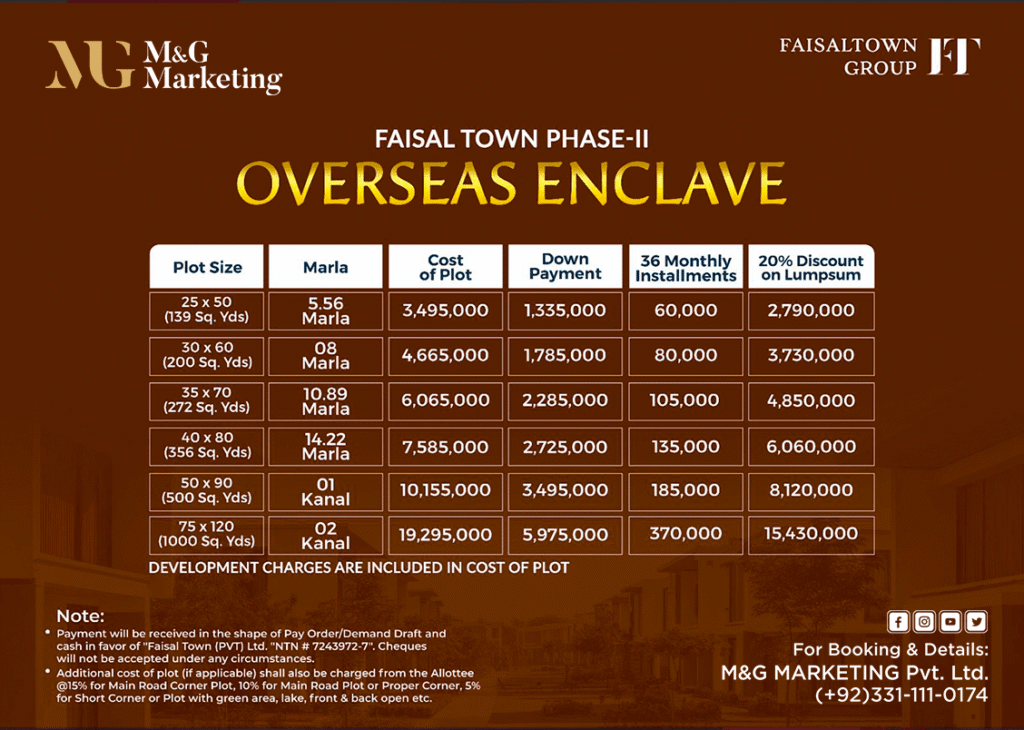
Mid-Stage Market Behavior (Expectation vs Reality)
As the project progressed:
- Market focus shifted from announcements to execution
- Buyers began asking about development rather than just prices
- Resale activity became more visible
At this stage:
- Appreciation slowed compared to speculative expectations
- Prices stabilized in some segments
- Liquidity improved modestly
This transition phase filters speculative buyers from long-term holders.
How Infrastructure Influenced Price Movement
Historical price behavior shows strong correlation with external infrastructure signals, including:
- Ring Road progress
- Connectivity toward Islamabad International Airport
- Regional access via M-2 Motorway
- Traffic movement around Thallian Interchange
Price movement historically responded more to infrastructure clarity than to internal marketing.
Block-Level Appreciation Differences
Not all plots appreciated equally.
Historically:
- Smaller plots showed better liquidity
- Certain blocks attracted more consistent demand
- Larger plots appreciated more slowly but steadily
This pattern reflects buyer affordability and resale behavior, not favoritism.
File vs Allocated Plot Price Behavior
Price history also differs by asset type:
Files
- Higher volatility
- More sensitive to market sentiment
- Easier entry but higher uncertainty
Allocated Plots
- Slower movement
- Higher buyer confidence
- Better long-term holding appeal
Beginners often misinterpret file price spikes as sustainable appreciation.
Comparison Context: Appreciation vs Capital Smart City
Capital Smart City is often used as a benchmark.
Key historical differences:
- Capital Smart City experienced sharper early volatility
- Faisal Town Phase 2 showed steadier, slower movement
- Liquidity cycles differed due to project scale
Neither pattern is inherently “better”—they reflect different market models.
Investor Behavior & Appreciation Cycles
Price appreciation historically followed:
- Announcement-driven interest
- Execution-based stabilization
- Infrastructure-led confidence shifts
Investors who aligned with cycle awareness performed better than those chasing peaks.
Overseas Pakistanis & Historical Holding Patterns
Overseas buyers historically:
- Entered early
- Held longer
- Prioritized documentation clarity
Their behavior contributed to price stability rather than volatility.
What Price History Does Not Guarantee
Historical appreciation does not guarantee:
- Future price doubling
- Fixed appreciation timelines
- Uniform growth across all plots
Past behavior is a reference, not a promise.
Developer & Market Trust Context
Faisal Town Phase 2 is associated with:
- Chaudhry Abdul Majeed
- Zedem
Market trust is built over time through execution, not historical pricing alone.
What Historical Appreciation Suggests Going Forward
Based on observed patterns:
- Gradual appreciation is more realistic than spikes
- Infrastructure milestones matter more than hype
- Long-term holding aligns better with historical outcomes
This makes Faisal Town Phase 2 more suitable for patient investors.
How M&G Marketing Uses Price History in Advisory
M&G Marketing Private Limited uses historical patterns to:
- Set realistic expectations
- Identify suitable entry points
- Avoid speculative decision-making
- Guide overseas and local buyers responsibly
📞 Historical vs current analysis: +92 331 1110174
FAQs – Plot Appreciation History
Has Faisal Town Phase 2 appreciated historically?
Yes, but appreciation has been gradual and phase-dependent.
Did prices ever decline?
Prices may stagnate or adjust during low-demand phases, which is normal.
Do all plot sizes appreciate equally?
No. Smaller plots historically showed better liquidity.
Is past appreciation a guarantee of future growth?
No. It is only a reference point.
Should buyers rely only on price history?
No. Current market conditions and development progress matter more.