
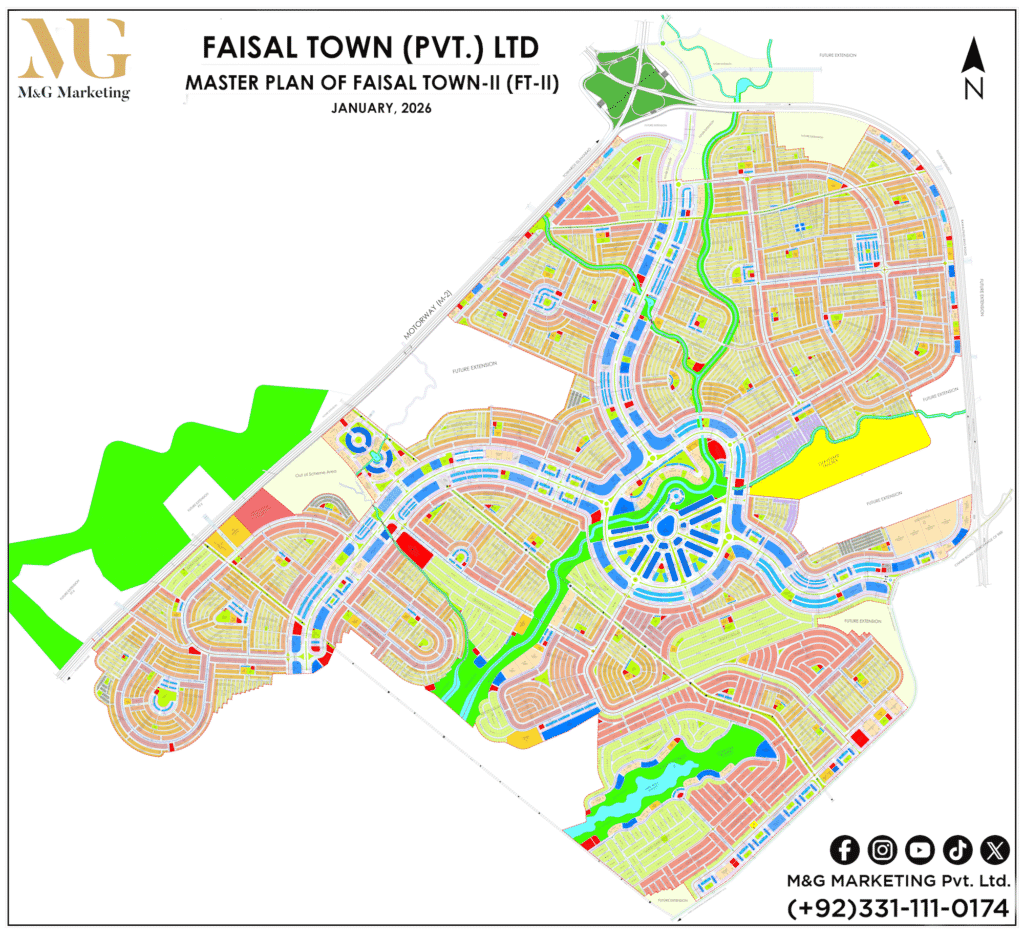
Searches like “why prices are increasing in Faisal Town Phase 2” usually come from buyers trying to answer a practical question:
Is the price rise real and sustainable—or just hype?
Price movement in Faisal Town Phase 2 is not driven by a single factor. It is the result of multiple, layered drivers—some structural, some market-based, and some behavioral.
This page breaks down what’s actually pushing prices up, what may slow them down, and how buyers should interpret the trend—without speculation.
📞 Price-movement advisory: +92 331 1110174
1) Infrastructure Alignment (Primary Long-Term Driver)
Ring Road Connectivity
Properties aligned with Ring Road gain:
- Better cross-city access
- Reduced congestion exposure
- Long-term relevance in city planning
Ring Road does not cause instant spikes—but it raises the floor for long-term values.
Airport & Motorway Access
- Proximity toward Islamabad International Airport
- Connectivity via M-2 Motorway
- Access through Thallian Interchange
These collectively expand the buyer pool—especially overseas Pakistanis and intercity investors.
2) Islamabad’s Expansion Belt Shift
Islamabad’s growth has moved toward planned peripheral zones due to:
- Central sector saturation
- Traffic constraints
- Rising land costs in established areas
Faisal Town Phase 2 sits within this expansion belt, which attracts:
- Long-term investors
- Developers’ planning focus
- Infrastructure sequencing
3) Supply vs Demand Dynamics
Demand Drivers
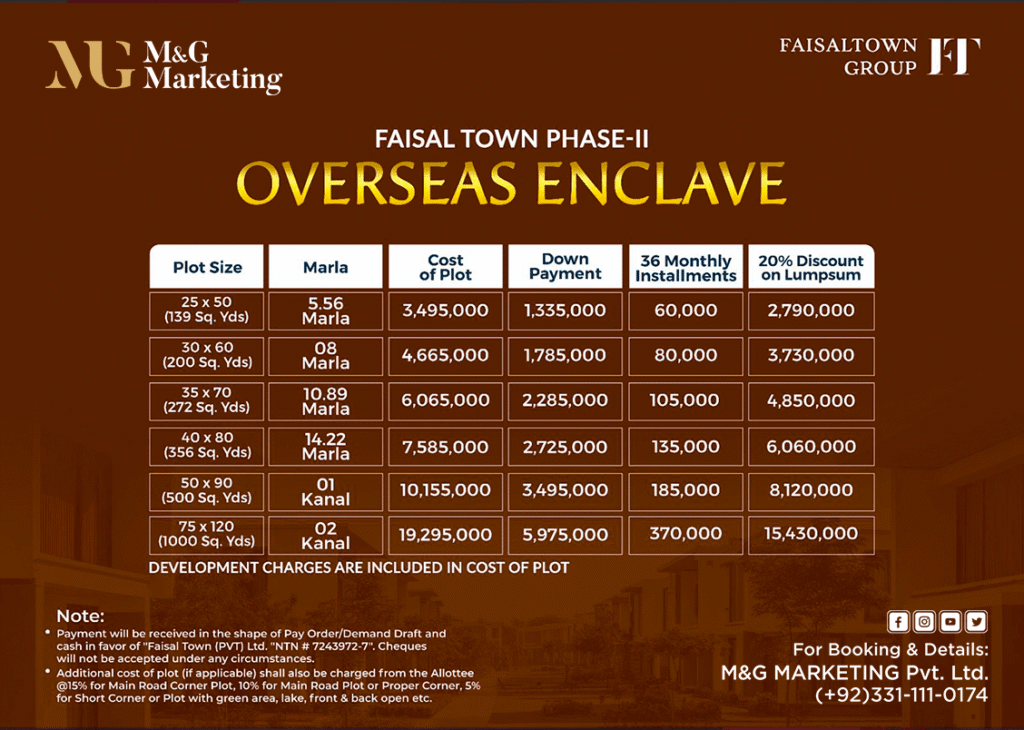
- Affordable entry compared to fully mature societies
- Improved accessibility narrative
- Investor rotation from overheated areas
Supply Constraints
- Controlled release of inventory
- Allocation phases
- Transfer eligibility windows
When demand expands faster than available, prices respond upward.
4) Allocation Progress & Certainty Premium
As files move toward allocation:
- Risk perception reduces
- Buyer confidence improves
- Price gap between files and plots narrows
This certainty premium is a recurring driver in developing societies.
5) Market Maturity Effect (Early → Mid Stage)
Price acceleration often occurs when a project transitions from:
- Early speculative phase
to - Mid-stage development awareness
At this point:
- More end-users enter
- Investors hold longer
- Volatility reduces
Faisal Town Phase 2 is moving along this curve.
6) Developer Reputation & Planning Continuity
The project’s association with:
- Chaudhry Abdul Majeed
- Zedem
supports market confidence. While reputation alone does not guarantee returns, it reduces uncertainty, which influences pricing behavior.
7) Comparative Pricing Pressure from Nearby Societies
When nearby projects appreciate, price anchoring occurs.
Comparisons with Capital Smart City and other adjacent developments lead buyers to reassess “relative value,” pushing prices where gaps exist.
8) Overseas Buyer Participation
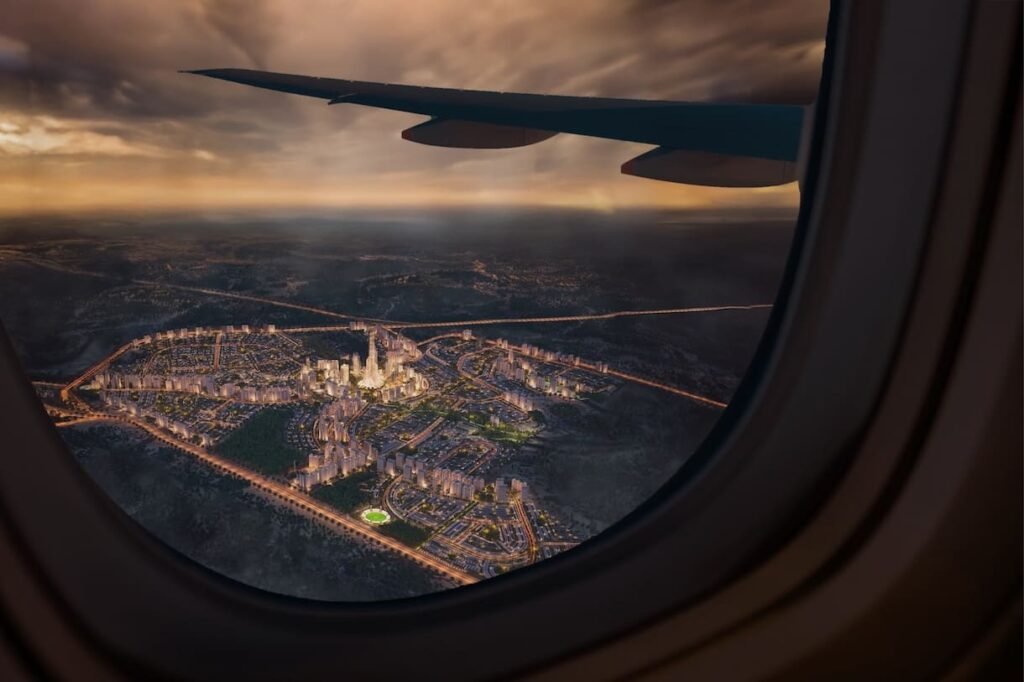
Overseas Pakistanis often:
- Buy with longer holding horizons
- Focus on location connectivity
- Are less sensitive to short-term fluctuations
Their participation stabilizes demand and supports gradual price increases.
📞 Overseas demand insight: +92 331 1110174
9) Inflation & Construction Cost Reality (Macro Layer)
While not unique to Faisal Town Phase 2, broader factors like:
- Construction cost inflation
- Currency pressures
- Replacement cost logic
Influence baseline pricing expectations across the Islamabad market.
10) Behavioral Factors (Buyer Psychology)
Price increases are also fueled by:
- Fear of missing out (FOMO)
- Social proof (peer buying)
- Media and word-of-mouth narratives
These can accelerate trends temporarily, but they do not replace fundamentals.
What This Price Increase Means for Buyers
For Long-Term Investors
- Gradual appreciation is more sustainable than spikes
- Holding discipline matters more than timing
For Short-Term Traders
- Volatility windows may exist—but carry risk
- Liquidity varies by plot size and allocation status
For End-Users
- Entry cost rises over time
- Early planning reduces pressure
What Could Slow or Pause Price Growth?
Important to acknowledge risks:
- Market-wide slowdowns
- Policy or regulatory shifts
- Over-expectation of short-term returns
- Liquidity contraction
Price trends are directional, not linear.
How M&G Marketing Interprets Price Movement
M&G Marketing Private Limited evaluates price movement through:
- Infrastructure sequencing
- Demand quality (end-user vs speculative)
- Allocation timelines
- Liquidity indicators
📞 Price analysis consultation: +92 331 1110174
FAQs – Why Prices Are Increasing
Are prices increasing due to hype?
No. Multiple structural and market factors are involved.
Does Ring Road guarantee higher prices?
It supports long-term value, not guaranteed short-term gains.
Will prices keep increasing?
Trends can pause or slow; sustainable growth is gradual.
Is it too late to buy?
Timing depends on budget, intent, and holding horizon.
Do overseas buyers influence prices?
Yes. Their longer holding periods stabilize demand.